

Where infrastructure comes together.
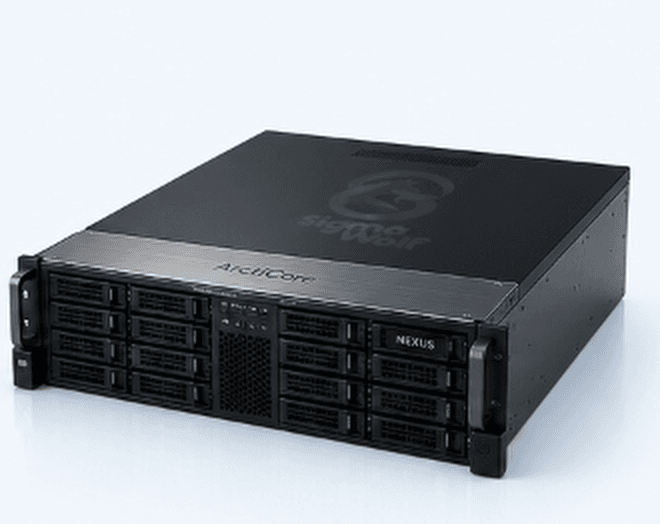
Nexus is ArctiCore’s integration and convergence platform — engineered to bring compute, storage, networking, and the systems around them into a coordinated infrastructure environment.
Infrastructure rarely exists in isolation.
Compute depends on storage. Applications depend on networks. Virtualized environments depend on all of them working together.
Nexus exists for that intersection — bringing the infrastructure layers together into an environment designed around how they interact, rather than treating each system as a separate island.
Where Nexus tends to run.
These are common environments, not a fixed list of what Nexus can do.
Virtualized environments
Infrastructure where multiple workloads share coordinated compute, storage, and networking resources.
Private cloud infrastructure
Environments that need cloud-like coordination while keeping infrastructure under direct control.
Infrastructure consolidation
Multiple systems brought together into a more coherent operating environment.
Enterprise application platforms
Applications whose performance depends on several infrastructure layers working together.
Hybrid infrastructure
Environments where on-premises infrastructure needs to coexist with external or cloud resources.
Data-intensive environments
Workloads where compute, storage, and network movement need to remain coordinated.
Connected. Coordinated. Converged.
Nexus starts with relationships — understanding how compute, storage, networking, and applications depend on one another, then engineering the infrastructure around those relationships.
- Connected
- Coordinated
- Converged
- Scalable
Microservices, AI pipelines, databases & virtualization
Multi-socket CPUs, CXL memory expansion & GPU lanes
Direct PCIe Gen 5 NVMe arrays with sub-millisecond I/O
Redundant 100G/400G RoCEv2 with zero-packet-drop fabric
Every layer has a role. Nexus brings them together.
These aren’t line items on a shopping list. They’re the infrastructure layers the engineering team considers when building an environment around how systems actually interact.
Compute
Processing capacity designed to work as part of a broader infrastructure environment.
Memory
Capacity that supports consolidated and shared workloads without becoming an afterthought.
Storage
Data infrastructure positioned around the applications and compute that depend on it.
Networking
Connectivity engineered to move workloads and data between infrastructure layers.
Integration
Architecture that considers how the individual systems interact rather than treating them independently.
Management
Infrastructure designed with operational visibility and coordinated management in mind.
Engineer the relationships, not just the components.
For Nexus, engineering begins with understanding what depends on what — then designing the infrastructure around those relationships.
Understand
Map the workloads, systems, dependencies, and constraints.
Connect
Identify where infrastructure layers need to interact.
Architect
Define the right balance between compute, storage, networking, and management.
Integrate
Bring the infrastructure layers together into a coherent environment.
Validate
Check performance, resilience, operational fit, and workload behavior.
Deploy
Introduce the environment without unnecessarily disrupting what already works.
Evolve
Adapt the infrastructure as workloads, applications, and requirements change.
You envision. The components contribute. The Wolves engineer. ArctiCore brings it to life.
Who Nexus tends to fit.
General patterns, not a customer list.
Teams modernizing infrastructure
That need multiple infrastructure layers to work together more coherently.
Organizations consolidating environments
That are bringing separate systems and workloads into a more coordinated architecture.
Teams building private or hybrid infrastructure
That need control without treating every infrastructure layer as an isolated system.
Nexus is part of the ArctiCore family.
Platforms are engineered independently, but they’re not engineered in isolation.
Nexus may provide the surrounding infrastructure environment in which substantial general-purpose compute operates.
Nexus can sit around accelerated workloads when GPU compute needs to operate as part of a broader infrastructure environment.
Nexus can connect application and compute environments with dedicated data infrastructure.
Nexus may extend coordinated infrastructure beyond the primary environment when distributed workloads enter the picture.
Not sure if Nexus is the right starting point?
Perfect. That’s what the Wolves are for.
Tell us what you’re trying to bring together.
Let’s figure it out together.